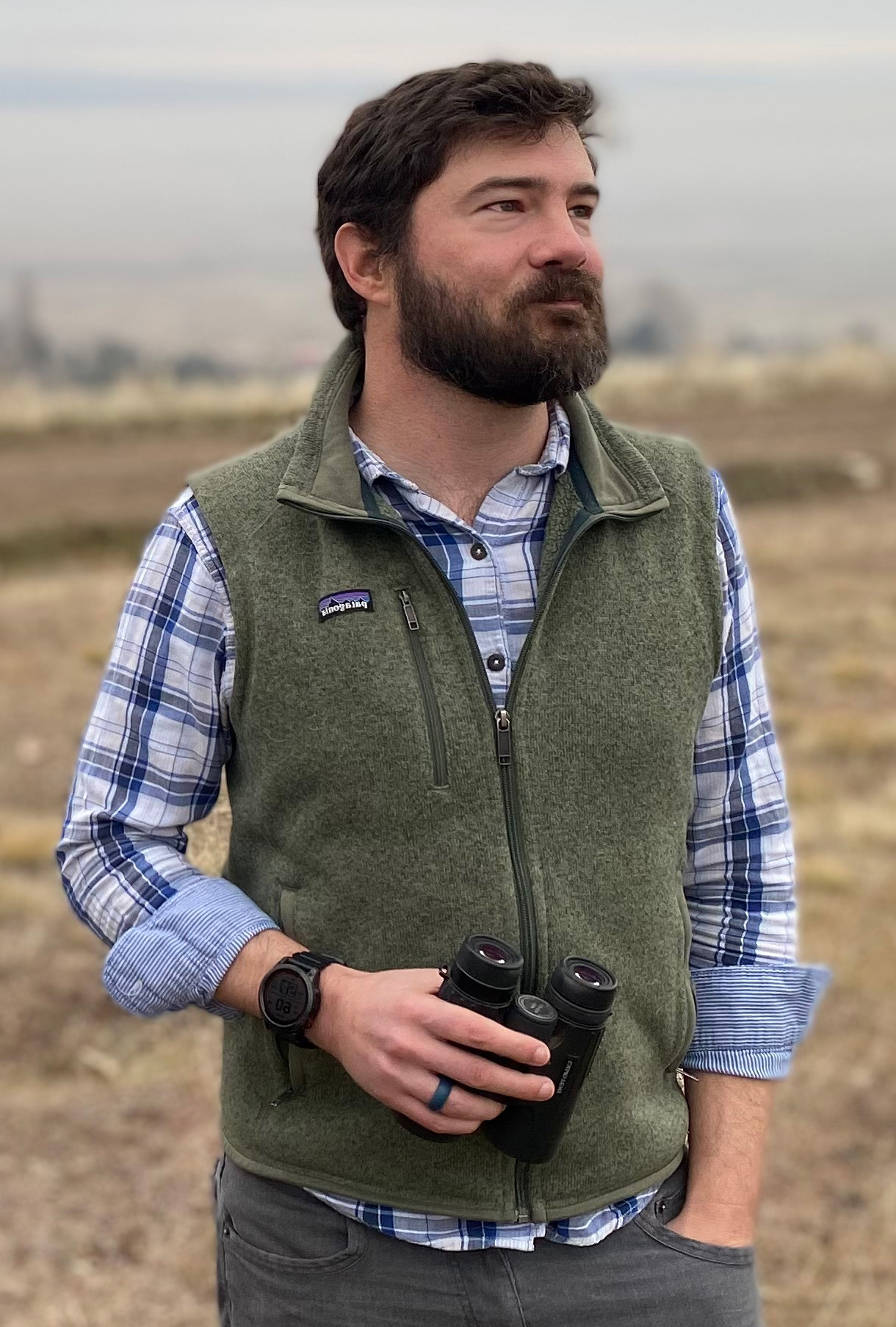
Christopher J. W. McClure, Ph.D.
Quantitative Ecologist
Owner and Principal Scientist, Sound Science, LLC
Chief of Science and Conservation, The Peregrine Fund
About
I am a quantitative ecologist and conservation scientist serving as Owner and Principal Scientist at Sound Science, LLC and Chief of Science and Conservation at The Peregrine Fund. My work focuses on applying statistical and computational methods to address critical questions in raptor ecology and conservation worldwide.
I received my Ph.D. in Biological Sciences from Auburn University (2012) and B.S. in Environmental Economics and Management from the University of Georgia (2005). I am a Fellow of the American Ornithological Society, Associate Editor for the Journal of Raptor Research, and North American Director of the Raptor Research Foundation.
My research has been featured in leading journals including Nature, PNAS, Science Advances, and Conservation Biology, and covered by media outlets such as National Geographic, NPR, The New Yorker, and Scientific American.
Research Interests
Raptor Conservation
Assessing global raptor populations, identifying conservation priorities, and developing evidence-based strategies to protect birds of prey worldwide.
Population Monitoring
Developing and evaluating methods for monitoring bird populations, including composite trend analysis and addressing biases in survey data.
Human-Wildlife Conflict
Researching interactions between raptors and renewable energy infrastructure, including automated curtailment systems to reduce eagle fatalities at wind facilities.
Sensory Ecology
Investigating effects of anthropogenic noise and sensory pollutants on wildlife behavior, distributions, and fitness across landscapes.
Books
How to Count Birds: A Guide for Monitoring Avian Populations
Johns Hopkins Press, 2026
State of the World's Raptors
The Peregrine Fund, 2025
Applied Raptor Ecology: Essentials from Gyrfalcon Research
The Peregrine Fund, 2017
Selected Publications
Author of 135+ peer-reviewed publications. For a complete list, please visit my Google Scholar profile.
- Sensory pollutants alter bird phenology and fitness across a continent Nature, 2020
- State of the world's raptors: distributions, threats, and actions Biological Conservation, 2018
- Eagle fatalities are reduced by automated curtailment of wind turbines Journal of Applied Ecology, 2021
- A phantom road experiment reveals that traffic noise is an invisible source of habitat degradation PNAS, 2015
- An experimental investigation into the effects of traffic noise on distributions of birds: Avoiding the phantom road Proceedings of the Royal Society B, 2013
- Conserving the evolutionary history of birds Conservation Biology, 2023
Contact
I welcome opportunities for collaboration and am happy to discuss research ideas.